
Bridging the Digital Divide Services
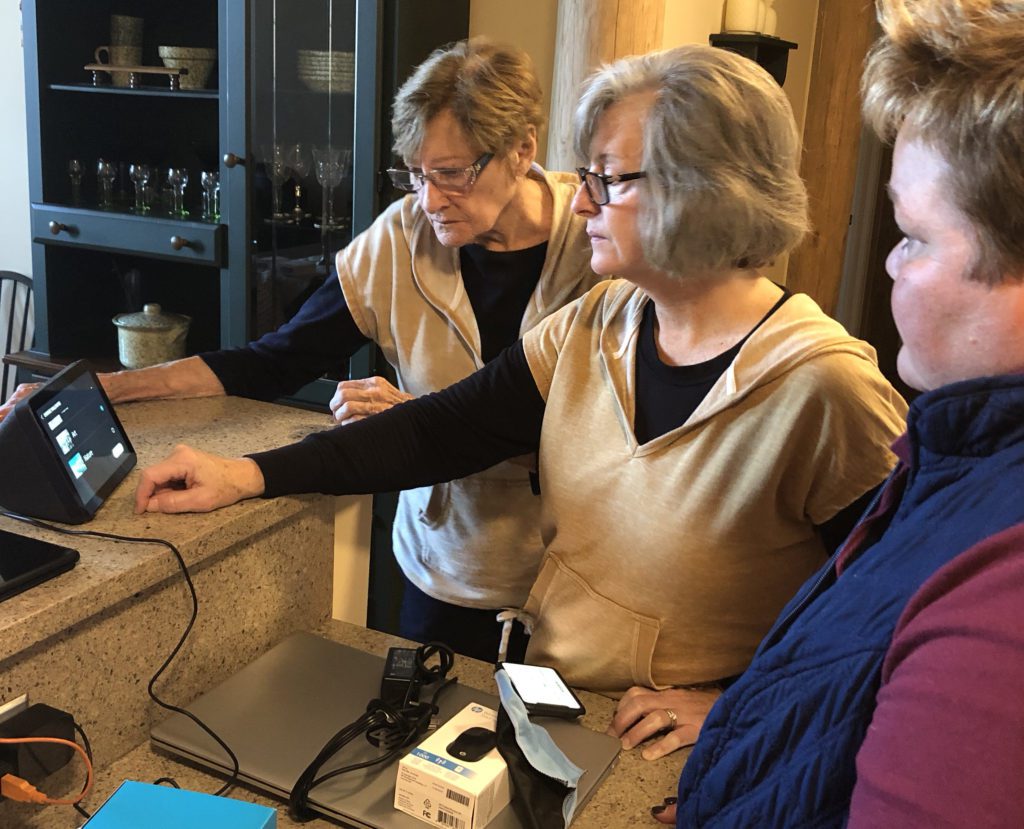
Bridging the Digital Divide (BDD) helps older adults and adults with disabilities in Eastern Connecticut build the skills, confidence, and access they need to use technology in everyday life. We provide digital literacy training, one-on-one and group technology support, and Assistive Technology (AT) devices tailored to each person’s needs—helping to bridge the Digital Divide, expand access to telehealth and other virtual services, and reduce social isolation. Our training and support can include basic device set-up and operation, connecting to Wi‑Fi, using built-in accessibility features, accessing virtual services and community programs, using telehealth and online medical resources, participating in community activities, ordering groceries and shopping online, understanding online privacy and safety, and troubleshooting common technology issues. We also share practical guidance on online safety and how to use AI tools responsibly. When appropriate, we disseminate AT devices and technology based on individual goals and needs, and we connect and refer Clients to additional community services and supports.
We also partner with local “Entities” that serve our communities—such as public libraries, community centers, senior centers, housing for seniors and individuals with disabilities, independent living centers, and similar organizations—by providing technical guidance and train-the-trainer sessions to help staff better support their clientele.
PROGRAM OFFERINGS

Services to individuals
- Increase access to technology & technology use
- Provide tech support, troubleshooting, & teach built-in device accessibility features
- Increase access to the community, virtual programming & tele-health to reduce social isolation
- Connect Individuals to community resources for ongoing supports
- Provide tablet technology (with or without hotspot) to individuals 60 & older, if eligible
Why connect with a Digital Divide Coordinator (DDC)?
If you or an individual you work with has technology but struggles to use it and would benefit from some training & support, such as:
- Connecting to their WiFi
- Learning to use social media to connect with family and friends
- Learning to use virtual platforms like Zoom, Teams, or virtual community services
- Learning how to use built-in accessibility features in their devices – speech to text, magnification, text to speech, etc.
- And more …
Services to Organizations
Provide training to entities, such as staff at senior and community centers, libraries, and other organizations that serve the same population, to help them provide access and tech support to their participants.
Why connect your agency to a Digital Divide Coordinator?
If your organization serves adults with disabilities or individuals 60 and older, and you/your staff could benefit from training to be able to support your clients, such as:
- Learn how to set up built-in accessibility features on your technology or your clients’ technology
- Learn how to set your clients up with virtual platforms or your virtual services
- Help clients use social media and other internet activities (e.g., online grocery shopping, accessing eBooks, connecting with friends & family).
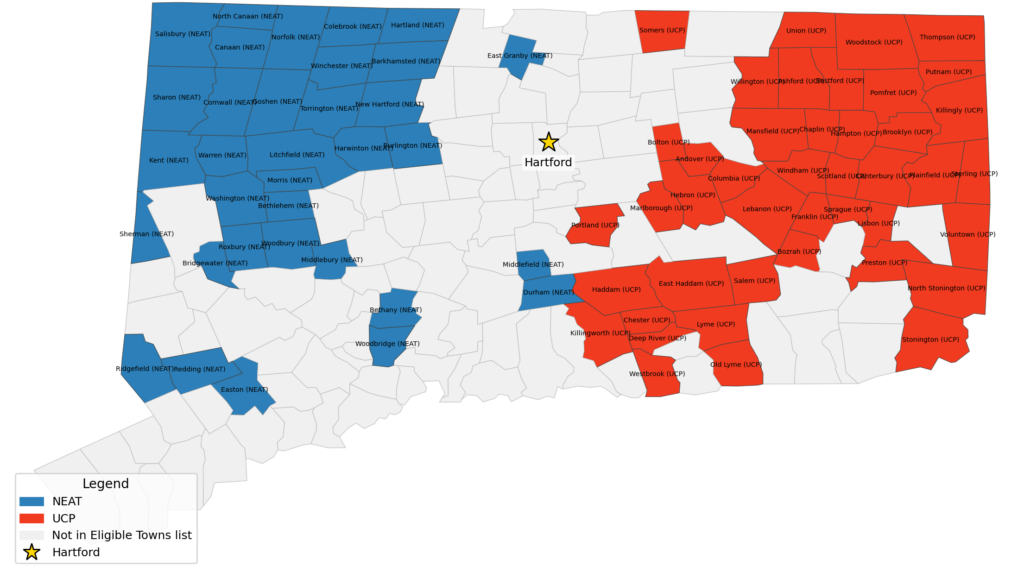
CT Eligible Towns by Provider (NEAT/UCP) + Hartford

ELIGIBILITY
Eastern CT residents aged 18+ with a disability, or aged 60+, regardless of disability, living in rural towns identified in the Rural Health Transformation Plan.
SERVICE LOCATIONS
- In-home Or Virtual
- Community resource centers like libraries, senior centers, assisted living, and community centers
- UCP’s Quaker Hill and Old Saybrook locations
Contact Our Digital Divide Coordinator:
email: DDC@ucpect.org,
phone: (860) 288-9520
Project Support
This project is supported by the Centers for Medicare & Medicaid Services (CMS) of the U.S. Department of Health and Human Services (HHS) as part of a financial assistance award totaling $154,249,105.53 in Budget Period 1 with 100 percent funded by CMS/HHS. The contents are those of the author(s) and do not necessarily represent the official views of, nor an endorsement, by CMS/HHS, or the U.S. Government.